

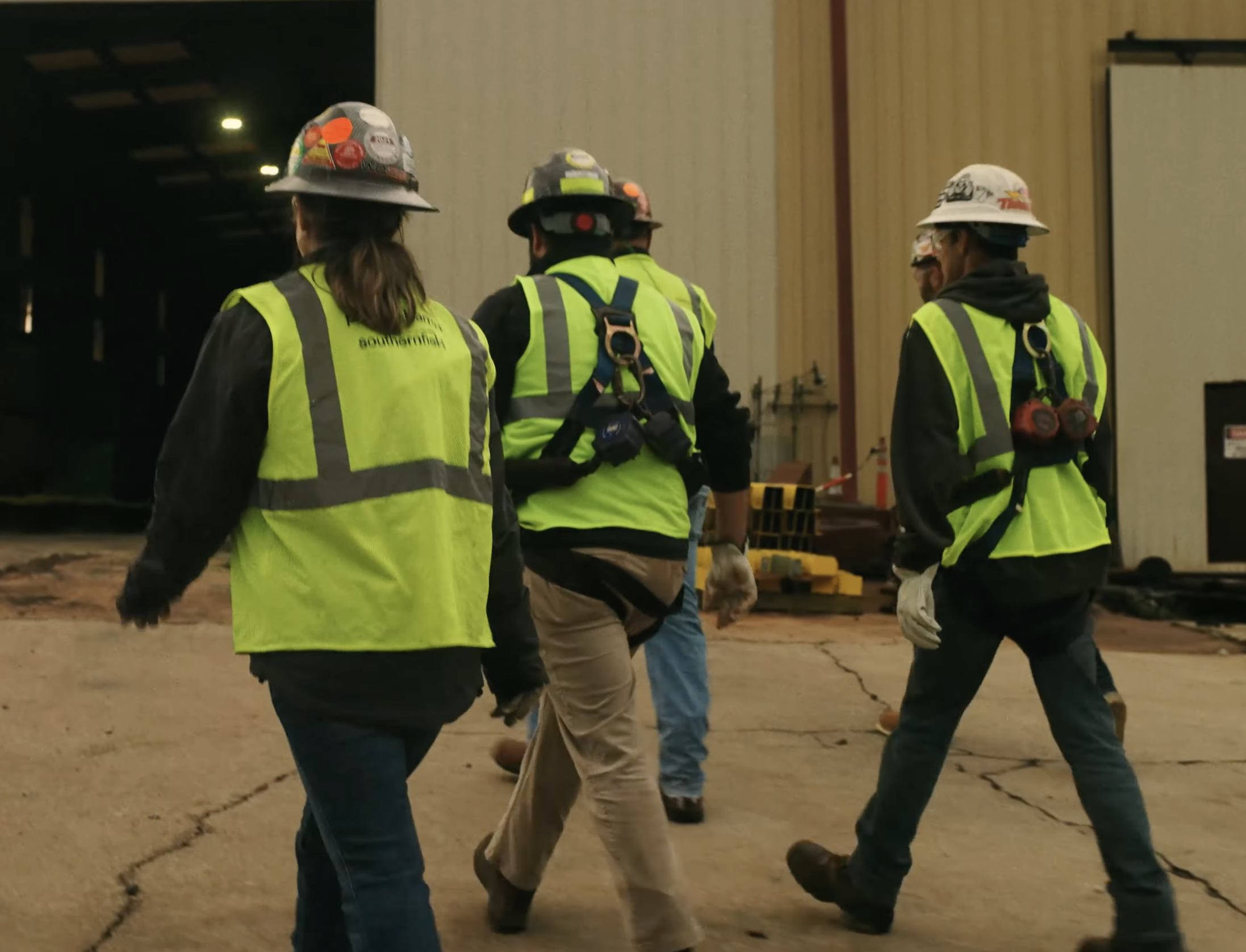
Expert Interview: Roy Hollis, Service Tech Group Leader
Host: Jen Little, Director of Commercial Operations
Keeping heavy industrial facilities running requires more than engineering; it demands real-time problem solving, advanced diagnostics, and highly skilled field technicians who can respond when critical equipment fails.
In this episode of Powering the Process, host Jen Little talks with Roy Hollis, Service Tech Group Leader at ProcessBarron, about industrial fan troubleshooting, predictive maintenance, and the evolving role of field service technology.
This behind-the-scenes look reveals how frontline technicians prevent downtime, optimize equipment performance, and keep power plants, paper mills, and manufacturing facilities operating safely and efficiently.
What Industrial Field Service Technicians Actually Do
Industrial service technicians are the first responders in manufacturing. They are called when critical equipment issues threaten production, often under extreme time pressure.
Their responsibilities include:
- Diagnosing equipment failures
- Performing fan balancing and vibration analysis
- Investigating structural and foundation issues
- Conducting root cause failure analysis
- Restoring equipment during emergency shutdowns
These professionals work in challenging environments where rapid solutions directly impact plant reliability and operational costs.
Common Causes of Industrial Fan Imbalance
Industrial fan imbalance is one of the most frequent problems affecting plant reliability. Causes vary depending on the operating environment.
Harsh-Environment Fans
Fans handling hot, abrasive, or contaminated gases often experience:
- Uneven blade wear
- Material buildup
- Debris accumulation
- Progressive vibration increases
Without regular monitoring, these issues can escalate into severe equipment damage.
Clean-Air Industrial Fans
Fans operating in cleaner conditions typically remain stable for long periods, but may develop an imbalance due to:
- Mechanical fatigue
- Foreign object impact
- Structural deterioration
Unexpected vibration spikes in these systems usually signal an underlying mechanical problem that requires immediate inspection.
The Step-by-Step Fan Troubleshooting Process
Effective industrial fan diagnostics follow a structured approach.
1. Data Review
Technicians first analyze:
- Vibration trends
- Historical performance data
- Operational changes
2. Physical Inspection
Once safety procedures are completed, inspections focus on:
- Material buildup or damage
- Loose components
- Structural defects
3. Foundation and Support Evaluation
Many vibration issues originate from weakened supports, cracked grout, or foundation deterioration rather than the fan itself.
4. Precision Balancing
Using advanced analyzers, technicians apply calculated corrections to restore stable operation.
How Modern Technology Is Transforming Industrial Diagnostics
Industrial fan maintenance has evolved dramatically over the past few decades.
Today’s advanced analyzers enable technicians to:
- Perform real-time vibration analysis
- Store and trend historical performance data
- Diagnose bearing and coupling issues
- Conduct natural frequency testing
- Evaluate the entire system health from one device
This technology significantly improves troubleshooting accuracy, reduces repair time, and enhances predictive maintenance capabilities.
The Role of Preventive Maintenance in Avoiding Downtime
Unplanned downtime can cost facilities millions in lost production. Preventive maintenance plays a critical role in minimizing risk.
Key strategies include:
- Annual equipment inspections
- Continuous vibration monitoring
- Wireless sensor deployment
- Early fault detection systems
Modern monitoring tools now provide real-time alerts, allowing technicians to intervene before failures occur.
A Real-World Example of Emergency Fan Repair
One notable case involved a paper mill shutdown caused by a failing industrial fan. With the entire facility offline, technicians quickly diagnosed the imbalance, applied corrective weights, and restored stable operation.
Within hours, the fan returned to service, preventing extended production losses and demonstrating the critical importance of rapid field response.
Skills Required for Industrial Service Technicians
Becoming a seasoned field technician requires years of experience and hands-on training. Essential traits include:
- Strong problem-solving ability
- Mechanical and diagnostic expertise
- Integrity and customer focus
- Adaptability under pressure
- Commitment to continuous learning
Training programs often include simulated failure environments to prepare technicians for real-world conditions.
The Future of Industrial Equipment Monitoring
The future of industrial maintenance is increasingly digital. Wireless monitoring systems now track:
- Vibration levels
- Temperature changes
- Alignment conditions
- Bearing health
These technologies allow facilities to transition from reactive repairs to predictive maintenance strategies that significantly reduce risk and improve reliability.
Why Field Service Remains Critical to Industrial Operations
Despite advancements in automation and analytics, the human element remains essential. Skilled technicians bring experience, judgment, and adaptability that technology alone cannot replace.
Their work ensures:
- Safe plant operations
- Reduced downtime
- Optimized equipment performance
- Long-term customer trust
In heavy industry, these frontline experts are often the difference between costly shutdowns and continuous production.
ProcessBarron’s Commitment to Customers
At ProcessBarron, manufacturing service is built on precision, accountability, innovation, and people. It’s reflected in award-winning operations, advanced technologies, strong safety practices, and a culture committed to doing things the right way, every time.
Because in industrial manufacturing, great service isn’t optional. It’s the standard.
Listen to more episodes!
Contact a ProcessBarron sales representative near you.